April 7, 2026 / Grade: C
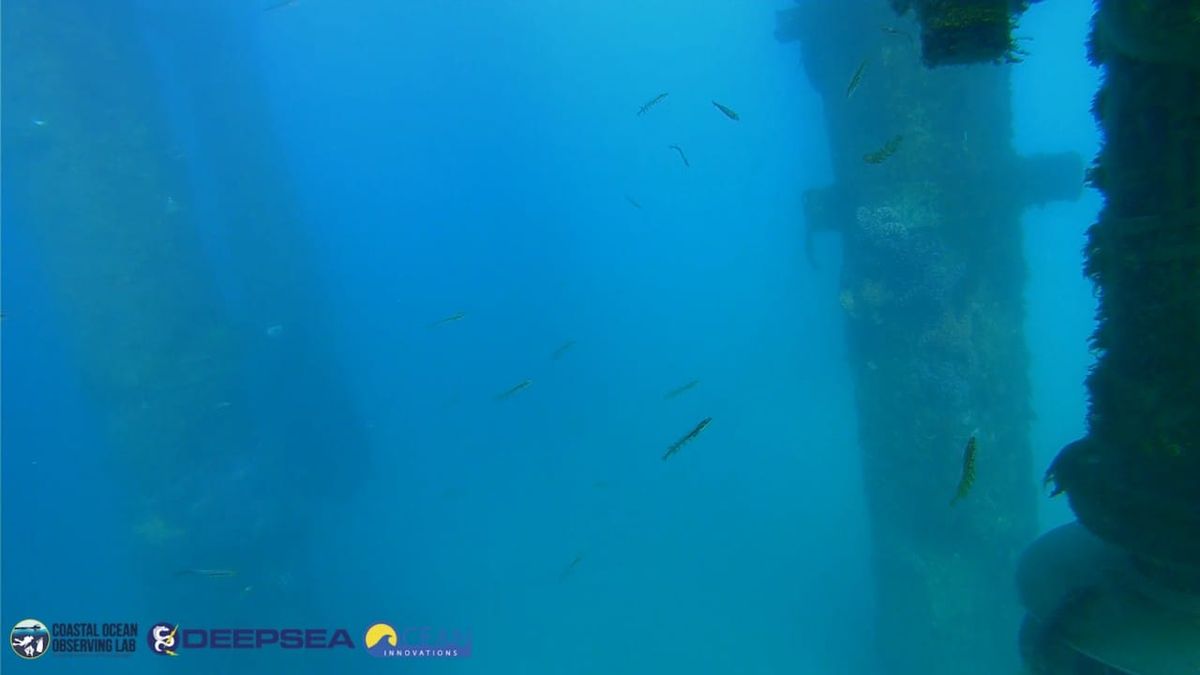
3:00 PM Update — Grade C
Visibility: 10–13 ft
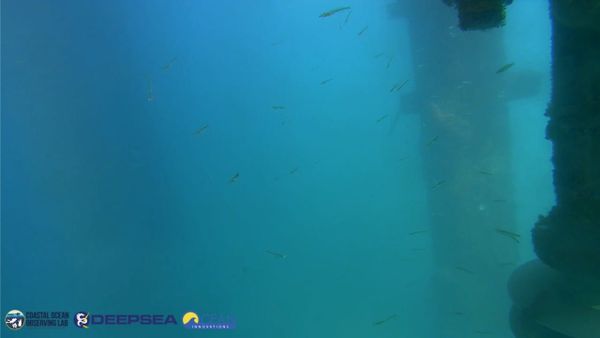
The 4 ft pilings on the right side of the frame are visible with some surface detail discernible, including biological encrustation (mussels/algae), though they carry a soft haze that slightly reduces sharpness. The 11 ft pilings are present and identifiable as a distinct second tier, but they appear noticeably hazy and lack crisp structural definition — outlines are readable but fine surface detail is lost. No clear third piling set at 14 ft can be independently confirmed; what appears in the mid-to-far water column are scattered fish silhouettes rather than a distinct piling tier, and no third structural column is clearly resolved beyond the second set. The water is a characteristic mid-blue-green tone with moderate particulate scatter, consistent with moderate visibility. Applying the counting rule strictly, only two piling tiers are confidently identified, which places this at C-grade or lower by the absolute rule.
The blue-green water color and diffuse haze throughout the water column suggest moderate suspended particulate load, likely a mix of plankton and fine sediment typical of nearshore pier conditions. Short-period swell energy is likely contributing mild bottom disturbance and surface chop that keeps particles in suspension. Visibility appears uniform through the water column with no strong thermocline layering evident.
Conditions are marginal for diving — serviceable for experienced divers comfortable with 10–13 ft visibility but not ideal for photography or navigation around the pilings. Visibility may improve slightly around the incoming high tide late tonight as tidal flushing increases, though short-period swell is likely keeping sediment slightly elevated.
• Wind: 6.2 mph
• Cloud Cover: 5%
• Water Temp: 66.9°F
• Chlorophyll: None mg/m³ (ERROR)
• Swell: 2.3 ft @ 6.0 sec from NW (288°) — favorable
• Tide: Unknown → next H at 00:19 (4.28 ft)
• Community Report: No report
3:00 PM Update — Grade C
Visibility: 10–13 ft
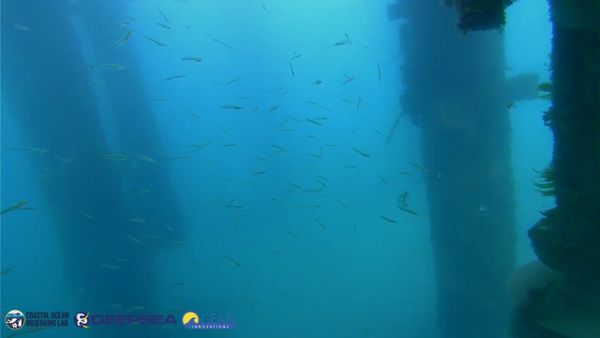
The 4 ft pilings on the right side of the frame are visible with some surface detail, including what appears to be algae/mussel growth, though they lack the crisp sharpness expected in good conditions. The 11 ft pilings are discernible as a second set further back but appear notably hazy and lack clear structural definition — their edges are soft and detail is lost. The 14 ft pilings cannot be confidently identified as a distinct third tier beyond the 11 ft set; no clearly separate third piling group is visible in the frame, which by the counting rule limits this to two identifiable tiers. The water is a milky-teal blue rather than deep clear blue, suggesting moderate particulate or plankton suspension throughout the water column. Multiple small fish are visible in the midwater, which is consistent with typical pier conditions but does not aid visibility assessment.
The milky, slightly greenish-teal cast to the water column suggests moderate turbidity, likely from suspended particulates, plankton bloom, or fine sediment. Short-period swell conditions can stir up near-bottom sediment and increase water column turbidity even in modest sea states. Overall conditions appear typical of moderate coastal visibility with no exceptional clarity or exceptional degradation.
Conditions are marginal — acceptable for experienced divers comfortable with 10–13 ft visibility, but not ideal for photography or less experienced divers. Visibility may improve slightly around the low tide window in the morning as tidal exchange slows and suspended material settles.
• Wind: 6.2 mph
• Cloud Cover: 5%
• Water Temp: 66.9°F
• Chlorophyll: None mg/m³ (ERROR)
• Swell: 2.3 ft @ 6.0 sec from NW (288°) — favorable
• Tide: Unknown → next L at 07:45 (0.493 ft)
• Community Report: No report
12:00 PM Update — Grade C
Visibility: 10–13 ft
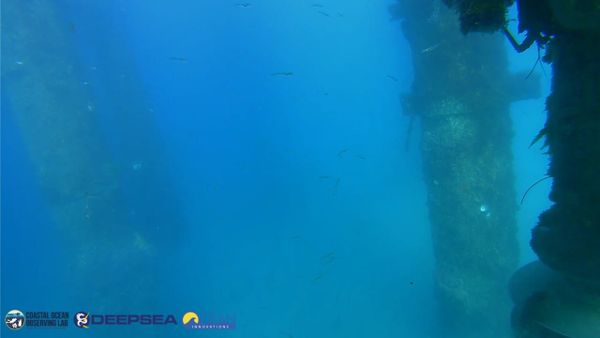
The 4 ft pilings on the right side of the frame are visible but show only moderate surface detail — they appear somewhat soft with a hazy outline rather than crisp structural definition. The 11 ft pilings are present and identifiable but are clearly hazy, lacking sharp structural detail and blending into the blue-green water column. The 14 ft pilings are not clearly distinguishable as a third distinct tier — only two piling sets can be confidently identified in this image, and no third set appears beyond the mid-range pilings with discernible structure. The water has a murky teal-blue coloration with notable particulate suspended throughout, reducing contrast significantly. A school of small fish (likely juvenile topsmelt or similar) is visible mid-frame, which is typical but adds to the visual complexity. Overall clarity is moderate at best, consistent with reduced but not poor visibility.
The teal-green tint and suspended particulate throughout the water column suggest mild turbidity, likely from a combination of biological material (plankton bloom or detritus) and some wave-driven mixing near the surface. The relatively short-period swell can stir up sediment and keep the water column mixed, preventing the deep blue coloration associated with cleaner, higher-visibility conditions. Conditions appear typical of moderate coastal turbidity rather than severe storm-related runoff.
Conditions are marginal — acceptable for experienced divers comfortable with 10–13 ft visibility but not ideal for photography or novice divers. Visibility may improve slightly around the low tide window early in the morning as tidal flushing subsides, so an early morning dive could offer a modest improvement.
• Wind: 8.1 mph
• Cloud Cover: 0%
• Water Temp: 66.6°F
• Chlorophyll: 0.37 mg/m³ (GREEN)
• Swell: 2.3 ft @ 7.0 sec from NW (285°) — favorable
• Tide: Unknown → next L at 07:45 (0.493 ft)
• Community Report: No report
12:00 PM Update — Grade C
Visibility: 10–13 ft
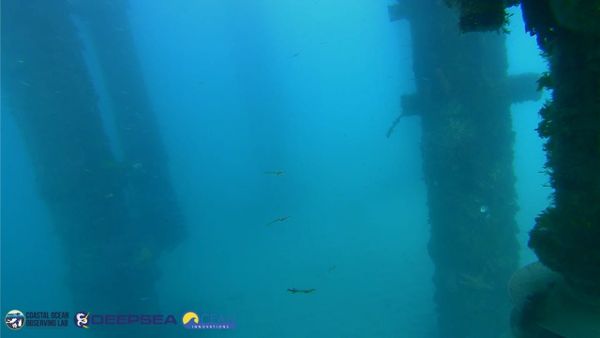
The 4 ft pilings on the right side of the frame are visible but lack crisp surface detail — they appear as dark silhouettes with softened edges rather than showing distinct barnacle or concrete texture. The 11 ft pilings are discernible as darker vertical shapes in the mid-frame right side but are noticeably hazy, with structure reduced to broad outlines rather than defined surfaces. The 14 ft piling set cannot be independently confirmed as a third distinct tier — there is no clearly separate third set visible beyond what appears to be the 11 ft pilings. The water is a characteristic mid-range blue-green with moderate suspended particulate scatter, consistent with reduced but not poor visibility. Light penetration from the surface is decent, suggesting daytime ambient conditions, but the haze through the water column prevents confident identification of the third piling tier.
The blue-green water color with even mid-column haze suggests a moderate level of suspended particulates or biological turbidity, possibly fine sediment kept in suspension by recent swell activity or mild plankton presence. The relatively even scatter of light through the frame without strong green tinting rules out heavy algal bloom but points to typical Southern California coastal turbidity at moderate conditions. Short-period swell from the northwest would contribute to bottom agitation near the pier pilings, keeping fine particles suspended and limiting horizontal visibility.
Conditions are marginal for recreational diving — visibility is adequate for casual exploration near the pilings but not ideal for photography or detailed observation. A better window may occur around or just after the early morning low tide when tidal flushing has cleared some particulates, though improvement depends on whether swell-driven agitation settles.
• Wind: 9.0 mph
• Cloud Cover: 0%
• Water Temp: 66.0°F
• Chlorophyll: 0.37 mg/m³ (GREEN)
• Swell: 2.3 ft @ 7.0 sec from NW (292°) — favorable
• Tide: Unknown → next L at 07:45 (0.493 ft)
• Community Report: No report
Visibility is currently around 10–13 ft, based on the latest Scripps Pier camera image.
The 4 ft pilings on the right side of the frame are visible but appear somewhat soft and lacking crisp surface detail, suggesting moderate turbidity even at close range. The 11 ft pilings are discernible as dark structural forms but carry noticeable haze and lack fine surface definition. The 14 ft piling set cannot be independently confirmed as a third distinct tier — what appears beyond the mid-range pilings blends into the blue-green haze without clear structural separation, meaning only two tiers can be confidently identified. The water has a characteristic teal-green cast rather than deep blue, consistent with moderate visibility conditions. A loose school of elongated fish (likely barracuda or similar pelagic species) is visible in the mid-water column, but even they show softened contrast at distance, reinforcing the moderate clarity assessment.
The teal-green water color and diffuse light scattering suggest a moderate level of suspended particulates or phytoplankton in the water column, which is limiting horizontal visibility significantly. The relatively calm surface conditions implied by the image (no heavy surge disturbance visible) suggest the turbidity is primarily biological or residual sediment rather than active wave-driven mixing. Short-period swell can still introduce minor near-bottom turbulence that keeps fine particles in suspension, contributing to the greenish mid-column haze.
Conditions are marginal for recreational diving — visibility is workable but not ideal, and divers should expect 10–13 ft horizontal range at best. If the tide drops further toward the upcoming low, slight improvements are possible, though the biological tint in the water may persist regardless of tidal state.
Current Conditions
• Wind: 5.8 mph
• Cloud Cover: 42%
• Water Temp: 65.8°F
• Chlorophyll: 0.37 mg/m³ (GREEN)
• Swell: 2.3 ft @ 7.0 sec from NW (289°) — favorable
• Tide: Unknown → next L at 07:45 (0.493 ft)
• Community Report: No report
Dive Grade: C
🎥 Live Camera: https://coollab.ucsd.edu/pierviz/