April 9, 2026 / Grade: C
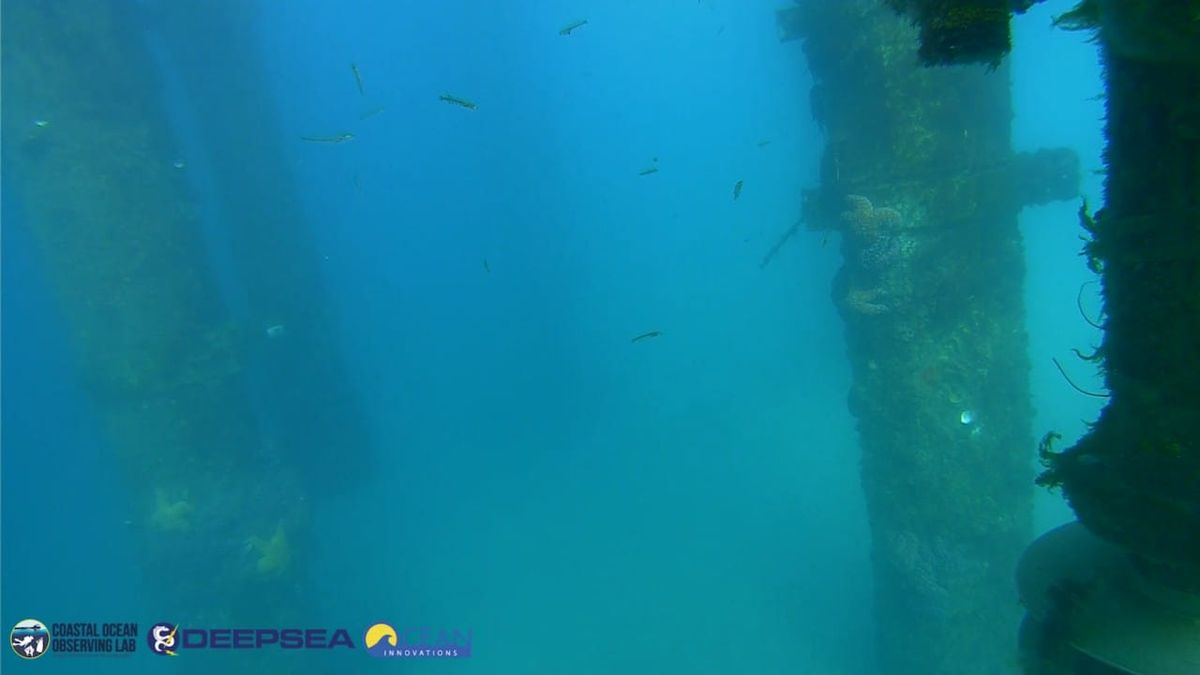
3:00 PM Update — Grade C
Visibility: 10–13 ft
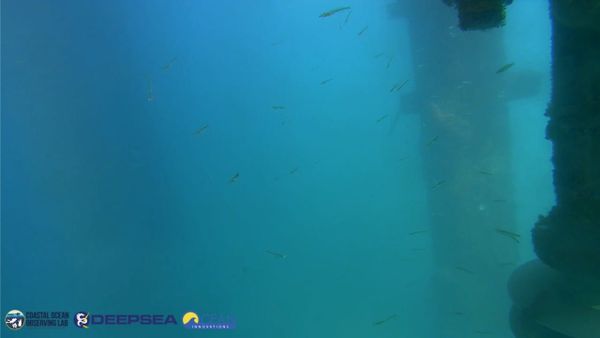
The 4 ft pilings on the right side of the frame are visible with some surface detail, including encrusting organisms and texture, though they appear somewhat softened by haze rather than crisp and sharp. The 11 ft pilings are visible in the mid-left portion of the frame but are notably hazy and lack clear structural definition — their edges are diffuse and detail is minimal. Only two distinct piling tiers can be confidently identified in this image; there is no clearly visible third set of pilings that would correspond to the 14 ft distance. The water is a characteristic greenish-teal color rather than deep blue, indicating suspended particulates or phytoplankton. The overall scene has a milky, diffuse quality with light scattering throughout the water column, consistent with moderate visibility conditions. No third piling set is distinguishable beyond the mid-range pilings, placing this firmly in Grade C territory.
The greenish-teal water color and pervasive mid-column haze suggest elevated suspended particulate matter, likely a combination of biological material such as phytoplankton or organic detritus and fine sediment. The relatively calm swell conditions visible in the image do not appear to be causing major bottom disturbance, so the reduced clarity is more likely attributable to a biological bloom or coastal upwelling-related turbidity rather than storm surge or surge-driven sediment resuspension. Light penetration appears moderate, consistent with daytime conditions but filtered by a turbid upper water column.
Current conditions are marginal for diving — visibility is workable for experienced divers doing a pier dive but would be disappointing for photography or wide-area exploration. Conditions may improve slightly during an outgoing or slack tide cycle, so checking again in a few hours could be worthwhile if clearer water is a priority.
• Wind: 7 mph
• Cloud Cover: 75%
• Water Temp: 67.5°F
• Chlorophyll: 0.37 mg/m³ (GREEN)
• Swell: 1.6 ft @ 11.0 sec from NW (278°) — favorable
• Tide: Unknown → next H at 03:26 (3.776 ft)
• Community Report: No report
3:00 PM Update — Grade C
Visibility: 10–13 ft
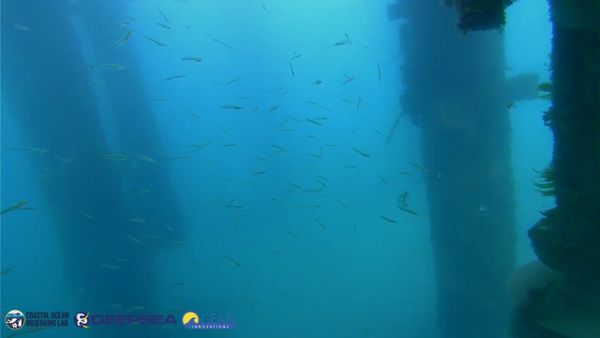
The 4 ft pilings on the right side of the frame are visible with some surface texture and biofouling detail discernible, though they carry a soft haze that prevents truly sharp definition. The 11 ft pilings on the left side are present but noticeably hazy, with structure visible but contrast significantly reduced — they appear as somewhat indistinct columns fading into the green-blue water column. A possible third piling set is hinted at in the far background, but it cannot be confidently identified as a distinct third tier with any real structural detail — it blurs into the ambient haze and cannot be reliably separated from the 11 ft set. Because only two piling tiers can be independently confirmed with certainty, the 14 ft pilings are effectively absent per the counting rule. The water is a characteristic turbid teal-green color, with moderate particulate scatter visible throughout the mid-water column and a school of small fish silhouetted in the haze.
The greenish tint and uniform mid-column haze suggest elevated particulate matter — likely a mix of phytoplankton, suspended sediment, and fine organic material common in nearshore Southern California waters during biologically active periods. The short-period swell conditions can stir bottom sediment and keep fine particles in suspension, reducing horizontal visibility even when the water appears calm from the surface. There is no dramatic turbidity event visible, but background chlorophyll scatter appears to be the dominant visibility-limiting factor.
Conditions are marginal for recreational diving — acceptable for experienced divers comfortable with 10–13 ft viz but not ideal for photography or navigation-dependent dives. Visibility may improve slightly in the early morning hours before any wind-driven surface mixing increases particulate suspension.
• Wind: 9.9 mph
• Cloud Cover: 100%
• Water Temp: 67.5°F
• Chlorophyll: 0.37 mg/m³ (GREEN)
• Swell: 1.6 ft @ 6.0 sec from NW (288°) — favorable
• Tide: Unknown → next H at 01:24 (3.945 ft)
• Community Report: No report
12:00 PM Update — Grade C
Visibility: 10–13 ft
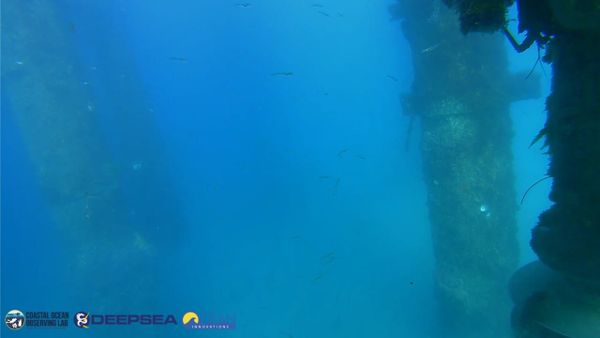
The 4 ft pilings on the right side of the frame are visible but lack sharp surface detail, appearing somewhat soft with moderate haze reducing contrast. The 11 ft pilings are discernible as structural forms in the mid-frame but are clearly hazed over with reduced definition — structure is there but not crisp. The 14 ft piling set cannot be independently confirmed as a third distinct tier; what appears in the background are scattered fish and indistinct shapes rather than a clearly identifiable third set of pilings. Water color is a murky blue-green rather than deep clear blue, indicating suspended particulates or moderate plankton load. With only two piling tiers confidently identified and no clearly visible third set, this falls firmly into Grade C territory per counting rules.
The blue-green tint and moderate haze suggest a mix of suspended biological material and possibly some sediment disturbance, consistent with moderate coastal turbidity. Visibility is reduced but not severely so — the water is not dark or brown, suggesting conditions are mid-range rather than poor. Plankton bloom or particulate suspension is the most likely culprit given the greenish cast and the way fish are visible but distant structure is not.
Conditions are marginal for recreational diving and would be limiting for photography or visibility-dependent work. If swell and wind conditions ease later in the day or around slack tide, there may be a modest improvement — early morning dives around low-light slack water often offer the best window at this site.
• Wind: 12.0 mph
• Cloud Cover: 75%
• Water Temp: 67.3°F
• Chlorophyll: 0.37 mg/m³ (GREEN)
• Swell: 2.0 ft @ 10.0 sec from NW (287°) — favorable
• Tide: Unknown → next H at 01:24 (3.945 ft)
• Community Report: No report
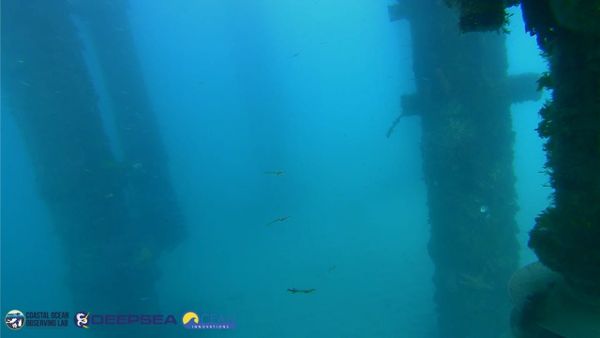
Visibility is currently around 10–13 ft, based on the latest Scripps Pier camera image.
The 4 ft pilings on the right side of the frame are visible with some surface detail, including what appears to be biological growth (algae/mussels), though they are not razor-sharp. The 11 ft pilings are discernible as darker structural shapes in the mid-frame, but they carry noticeable haze and lack crisp definition — structure is present but soft. The 14 ft pilings are not clearly identifiable as a distinct third tier; there are vague shadowy forms in the upper-center background, but these cannot be confidently identified as the 14 ft piling set with any structural detail. Following the counting rule, only two piling tiers can be independently confirmed, placing this firmly at Grade C. The water has a moderate blue-green hue with a milky, slightly turbid quality that diffuses light noticeably.
The milky blue-green water color and soft light diffusion suggest moderate particulate suspension, likely a combination of fine sediment and biological matter such as phytoplankton or suspended organics. The short-period swell conditions visible in sensor data are consistent with some mild surge-driven sediment disturbance near the pilings. Overall turbidity appears moderate rather than severe, pointing to typical coastal mixing rather than a major runoff or bloom event.
Conditions are marginal for diving — visibility in the 10–13 ft range is workable for experienced divers but not ideal for photography or less experienced divers. Early morning before wind and wave activity picks up may offer a slight improvement, but significant clearing is unlikely without a change in swell or current direction.
Current Conditions
• Wind: 6.9 mph
• Cloud Cover: 0%
• Water Temp: 66.9°F
• Chlorophyll: 0.37 mg/m³ (GREEN)
• Swell: 2.0 ft @ 6.0 sec from NW (288°) — favorable
• Tide: Unknown → next H at 01:24 (3.945 ft)
• Community Report: No report
Dive Grade: C
🎥 Live Camera: https://coollab.ucsd.edu/pierviz/