March 30, 2026 / Grade: C
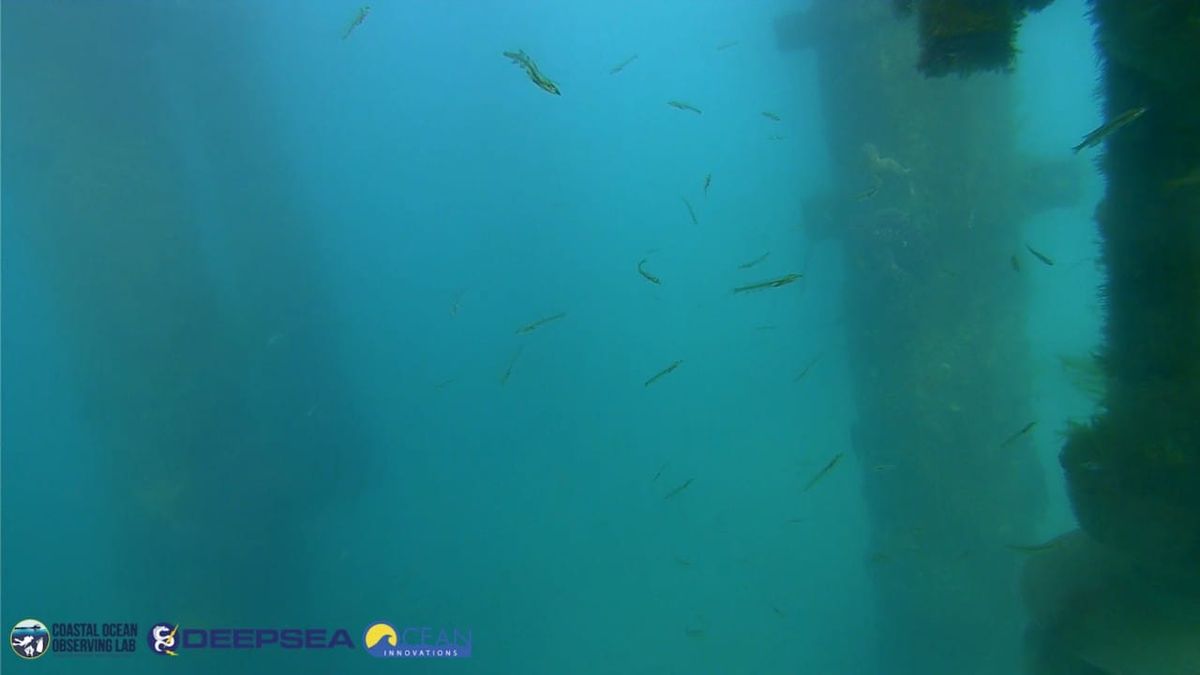
3:00 PM Update — Grade C
Visibility: 10–13 ft
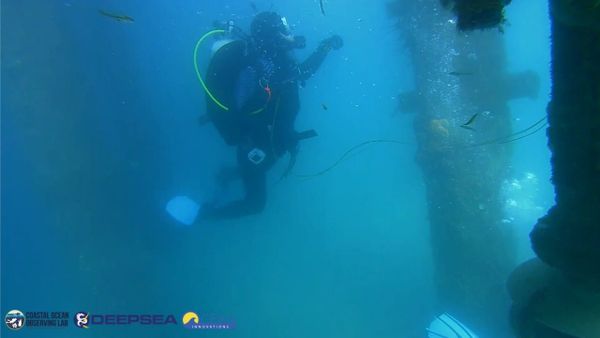
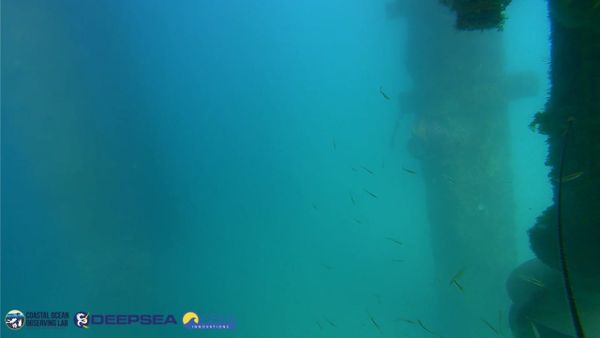
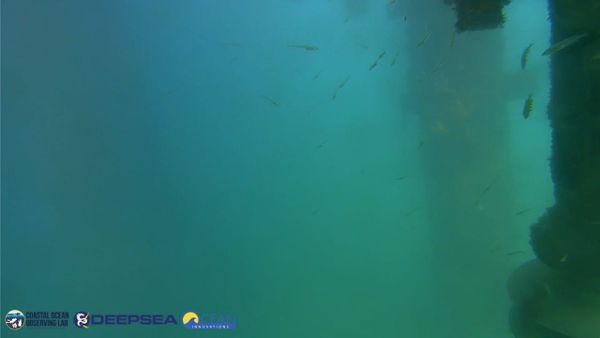
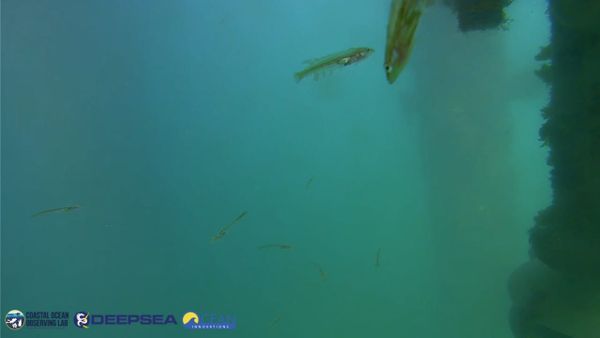
The 4 ft pilings on the right side of the frame are visible but lack sharp surface detail, appearing somewhat soft and diffuse rather than crisp — moderate haze is already present at close range. The 11 ft pilings are detectable as a mid-distance structure on the right side but show noticeable haze and reduced contrast, with only general form visible rather than clear structural detail. No distinct third piling set at 14 ft can be confidently identified as a separate tier beyond what appears to be the 11 ft set — I can only reliably distinguish two piling tiers, not three, which per the grading rules places this firmly at C or lower. The water is a characteristic greenish-teal color rather than deep blue, consistent with moderate turbidity and likely elevated particulate or plankton content. A loose school of elongated fish (likely anchovies or similar small schooling species) is scattered mid-water, which is typical of moderate visibility conditions at the pier.
The greenish-teal water color and moderate haze at relatively close range suggest elevated suspended particulates, likely a combination of biological material (phytoplankton or organic particulates) and some mild swell-driven bottom sediment suspension. The diffuse light scattering throughout the water column is consistent with typical late-afternoon or midday turbidity patterns seen during moderate swell periods at this site. Visibility appears fairly uniform with depth, suggesting a well-mixed water column rather than a sharp thermocline or sediment plume.
Conditions are marginal at roughly 10–13 ft visibility — acceptable for experienced divers but not ideal for photography or new divers. If conditions are swell-driven, early morning on a calm day may offer a brief improvement window before daytime heating and biological activity degrade visibility further.
• Wind: 7.6 mph
• Cloud Cover: 100%
• Water Temp: 65.7°F
• Chlorophyll: None mg/m³ (ERROR)
• Swell: 1.0 ft @ 11.0 sec from W (264°) — moderate
• Tide: Unknown → next L at 02:54 (0.299 ft)
• Community Report: No report
3:00 PM Update — Grade C
Visibility: 10–13 ft
The 4 ft pilings are not sharply resolved with crisp surface detail — they appear somewhat soft, suggesting even the nearest tier is affected by particulate matter in the water column. The 11 ft pilings are identifiable but clearly hazy, lacking structural definition and appearing as indistinct elongated forms rather than concrete surfaces with visible texture. The 14 ft pilings cannot be confidently identified as a third distinct tier — there are no clearly distinguishable piling structures at that distance, only a murky blue-green mid-water column with scattered small fish. The water color is a characteristic greenish-blue teal, indicative of moderate turbidity and likely elevated phytoplankton or suspended particulates. Only two piling tiers can be reasonably identified, confirming this does not meet Grade B criteria under the counting rule. The overall scene shows scattered senoritas or similar elongated reef fish swimming freely, which is typical of moderate visibility conditions near the pier. Visibility is estimated in the lower-to-mid C range given the soft near-field pilings and absent far-field tier.
The greenish-blue tint and general haze throughout the water column suggest a combination of suspended biological material — likely phytoplankton — and fine particulate sediment. Moderate wave energy at this period can gently stir near-bottom sediments and enhance turbidity without creating severe mixing, which is consistent with the moderate but not severe visibility observed. The kelp visible on the right-side pilings appears healthy, suggesting this is an ongoing moderate-turbidity event rather than an acute surge-driven sediment pulse.
Conditions are marginal for recreational diving — visibility in the 10–13 ft range is workable for experienced divers but not ideal for photography or navigation. Conditions may improve slightly around the low tide window in the early morning hours when tidal exchange and sediment mixing are reduced.
• Wind: 10 mph
• Cloud Cover: 0%
• Water Temp: 65.7°F
• Chlorophyll: 0.37 mg/m³ (GREEN)
• Swell: 1.0 ft @ 11.0 sec from W (264°) — moderate
• Tide: Unknown → next L at 02:15 (0.751 ft)
• Community Report: No report
12:00 PM Update — Grade C
Visibility: 10–13 ft
The 4 ft pilings are visible on the left side of the frame with moderate surface detail, though they appear somewhat softened by ambient haze rather than crisp and sharp. The 11 ft pilings are discernible as darker vertical structures in the mid-frame, but they lack clear structural definition — edges are diffuse and detail is lost in the greenish-blue haze. The 14 ft pilings cannot be independently identified as a third distinct tier; only two piling sets can be reliably located, which per the counting rule places this firmly at C or lower. The water exhibits a characteristic blue-green tint with suspended particulates creating a uniform haze that reduces contrast throughout the water column. A school of small baitfish (likely anchovies or silversides) is visible mid-water, which is consistent with moderate-visibility conditions that concentrate prey fish near structure. Overall clarity is moderate at best, with light penetrating reasonably well from above but horizontal visibility clearly limited.
The blue-green water color and diffuse haze throughout the frame suggest moderate particulate suspension, likely from a combination of plankton bloom activity and minor sediment mixing. The presence of dense baitfish schools near the pilings is consistent with upwelling-influenced, nutrient-rich water that often accompanies reduced visibility at this site. Conditions appear stable rather than actively deteriorating, suggesting mid-range visibility that is typical of moderate coastal water quality rather than an acute turbidity event.
Conditions are marginal for diving — acceptable for those comfortable with 10–13 ft visibility but not ideal for photography or detailed reef work. Visibility may improve slightly during the incoming tide cycle or early morning hours when biological activity and particulate suspension typically decrease.
• Wind: 9.3 mph
• Cloud Cover: 99%
• Water Temp: 65.5°F
• Chlorophyll: 0.37 mg/m³ (GREEN)
• Swell: 1.0 ft @ 13.0 sec from NW (281°) — favorable
• Tide: Unknown → next L at 02:15 (0.751 ft)
• Community Report: No report
Visibility is currently around 10–15 ft, based on the underwater camera image from Scripps Pier. The pilings on either side of the frame are clearly defined, though the background fades into a greenish-blue haze. A school of mackerel swims throughout the water column, which is a good sign of active marine life. However, the water carries a distinct teal tint suggesting moderate plankton levels, and with 100% cloud cover overhead, light penetration is limited—preventing the clarity you'd see on a bright, sunny day.
Conditions are stable but muted. The small 1.3 ft swell at 10 seconds isn't stirring up sediment, which helps, but the complete cloud cover is suppressing underwater brightness. The tide is mid-level at 4.9 ft and rising slowly. If the clouds were to break this afternoon, visibility would likely improve into the 15–20 ft range. For now, today earns a C+ rating — decent for a training dive or fish-watching, but photographers may want to wait for better light.
Best window: Early afternoon if sun breaks through; otherwise conditions hold steady through the day.
Estimated Visibility: 10–15 ft
Dive Grade: C+
Live Camera: https://coollab.ucsd.edu/pierviz/
📊 Current Conditions
• Wind: 5 mph from S
• Swell: 1.3 ft @ 10 s from SSW (198°)
• Tide: 4.9 ft (rising)
• Cloud Cover: 100% (overcast)
• Air Temp: 65°F